
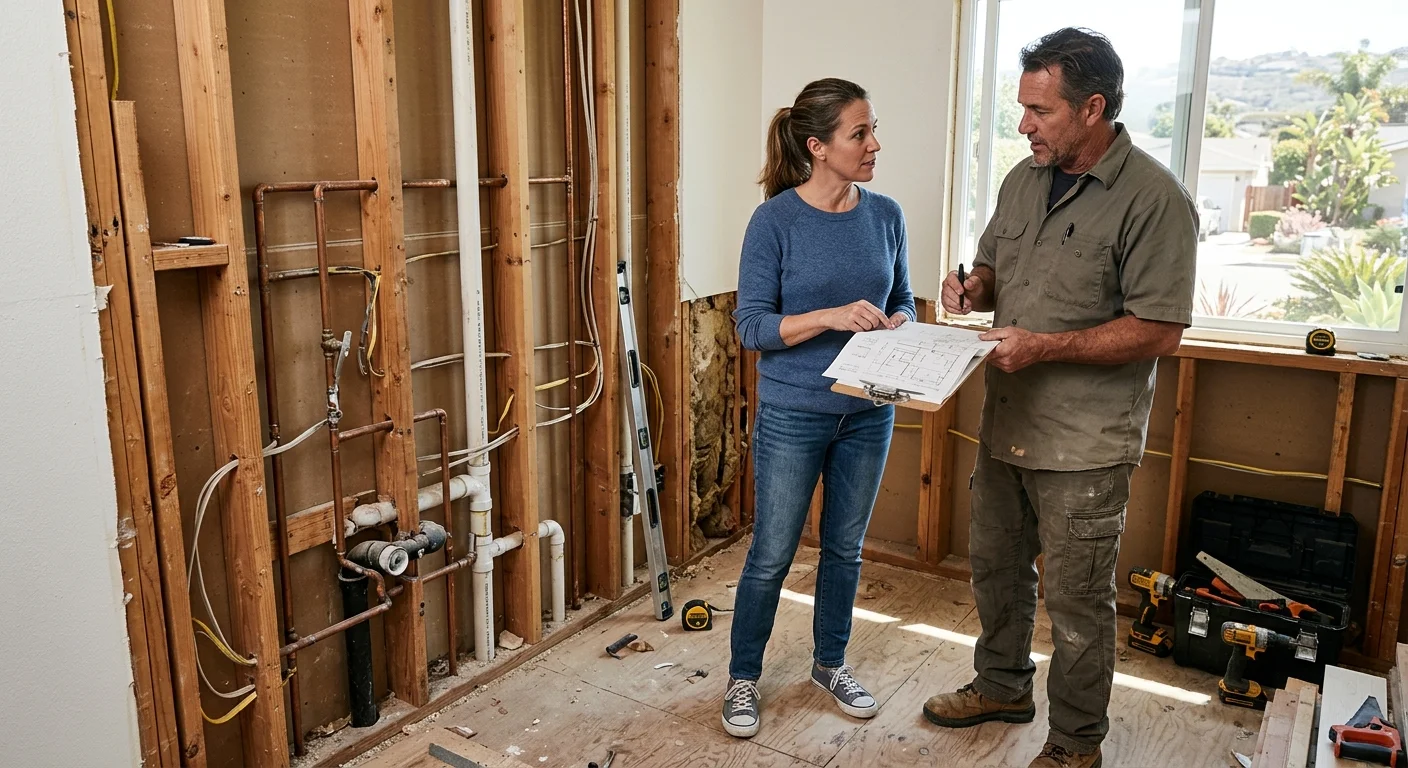
The right bathroom remodel contractor should make the job easier to understand before demolition begins. In San Diego County, start with a verifiable license, then compare the written scope, payment structure, change process, and daily supervision. A low total means little when plumbing, waterproofing, tile, ventilation, or permit coordination is missing.
Start with the CSLB license lookup
The CSLB lookup is the first screen for any California contractor you’re considering. Homeowners can check a license free through the Contractors State License Board using a contractor’s name or license number.
Ask for the license number before discussing finishes or signing paperwork. Run the search yourself. Then compare the name and number with the proposal and contract in front of you. If something doesn’t match, stop and get a clear explanation.
Don’t treat a logo, business card, or social profile as license verification. Those materials can introduce a company, but they don’t replace the state lookup. A contractor should be comfortable giving you the information needed to perform that check.
The Rock Remodels is a licensed California contractor, CSLB #1042918, based in Vista. You can search that exact number instead of relying on a verbal claim. Our guide to verifying a California contractor license walks through this first step in more detail.
A license check is the beginning of your review. It doesn’t tell you whether two proposals cover the same work. It also doesn’t explain who will supervise demolition, coordinate trades, or handle a condition found behind the wall. Those answers must come from the contractor and the written scope.
Keep the lookup result with your project documents. Your proposal, contract, invoices, change orders, and payment records should all identify the same business. Clear records make later conversations much easier.
What a bathroom remodel contractor should put in writing
A bathroom remodel contractor should describe the actual build, not just name the finished room. “Remodel bathroom” isn’t a useful scope. The proposal should show what comes out, what stays, what gets installed, and what happens when hidden damage appears.
Bathrooms pack several trades into a small space. Demolition may expose plumbing, wiring, framing, ventilation, and damaged wall material. Tile and fixtures can look finished while the work behind them remains hard to inspect. That’s why written details matter before the room gets opened.
A useful bathroom remodel bid should make these items easy to find:
- The demolition scope should identify the fixtures, finishes, walls, and built-ins being removed or protected.
- The plumbing and electrical scope should name the planned fixture locations and any known changes.
- The waterproofing and tile scope should describe the covered areas, materials, patterns, edges, and transitions.
- The finish schedule should identify the selected fixtures, cabinetry, hardware, paint, and accessories.
- The site plan should explain access, dust control, debris handling, material storage, and protection for nearby rooms.
The scope should also separate included selections from allowances or owner-provided items. If you’re buying the vanity, mirror, or tile, the proposal should say who checks dimensions and who receives the material. That prevents a gap between purchasing and installation.
Permit coordination belongs in writing too. The right path depends on the project address and planned work. A Vista home shouldn’t be handled through assumptions made for a City of San Diego address. Our San Diego remodel permit guide explains why the address and scope need to be settled early.
Changes need their own written process. The contractor should explain how added work is described, approved, and added to the project record. If demolition reveals damaged framing or old plumbing, you need a decision process before anyone covers the condition.
Our bathroom remodeling service shows how we approach the room as one connected build. For budget planning, read the guide to bathroom remodel cost factors in San Diego. Focus on what moves the total, including layout changes, finish selections, access, and hidden conditions.
How California payment safeguards work
California payment safeguards work best when the contract, payment schedule, invoices, and lien releases tell the same story. Before signing, compare the proposed terms with the current homeowner guidance published by CSLB. Don’t rely on a remembered percentage or someone’s verbal summary of a rule.
The payment schedule should be written before money changes hands. Each stage should identify what the payment covers. A vague request tied only to a date gives you little connection between payment and visible progress.
Ask how invoices will match the proposal. If the contractor bills for a completed stage, the invoice should point back to that stage. If materials are involved, the paperwork should make clear which materials the request covers. Keep invoices and payment confirmations together.
Lien releases belong in this conversation from the start. Ask how the contractor will collect and deliver them as the work moves forward. The answer should identify the paperwork, when it’s handled, and which party provides it. Keep each release with the related invoice and payment record.
Change orders need the same discipline. Added work should be described and approved before it blends into the original scope. The document should explain the change, its effect on the work, and how it affects payment. Verbal approval leaves too much room for two people to remember the conversation differently.
Build one project file before demolition. Save the signed agreement, scope, selections, invoices, releases, approvals, inspection records, and written changes. An email folder is helpful, but keep signed documents together as well.
If a payment request doesn’t match the written schedule, pause. Ask the contractor to connect the request to the agreement. If the terms conflict with current CSLB guidance, get qualified legal advice before proceeding.
What job-site supervision looks like
Good job-site supervision gives every trade one accountable point of contact. Bathroom work happens in a tight sequence, so a missed decision can affect several parts of the room.
Demolition reveals the conditions the finished bathroom has hidden. In a North Park bungalow, old supply lines may appear behind the wall. A Clairemont ranch may show layers from an earlier remodel. In a coastal home, moisture damage may change the substrate work. These conditions need to be documented before the next layer covers them.
The supervisor should connect each decision to the written scope. A plumbing change can affect framing, cabinetry, tile, and fixture placement. A shower niche can affect waterproofing and tile layout. Moving a light can affect the mirror and wall finish. Someone needs to track those connections.
Ask who receives daily job-site questions. You should know who reviews opened walls, confirms fixture placement, checks delivered materials, and communicates changes. The person selling the project shouldn’t disappear once demolition starts without explaining who takes responsibility.
Our trade coordination starts before materials get installed. Rough plumbing and electrical locations need to match the selected fixtures. Wall preparation needs to support the planned finish. Waterproofing details need review before tile hides them. Cabinets, tops, mirrors, glass, and accessories must fit the same layout.
I’m David Sanchez, and I’m on our job sites personally. That lets me see conditions as they appear and connect field decisions with the homeowner’s scope. It doesn’t remove the need for written records. Site conversations that change the work should still become documented changes.
Supervision also means protecting the rest of the home. Bathroom access may pass through bedrooms, hallways, or living areas. The proposal should explain how the crew plans to handle access, material storage, dust, and debris around occupied spaces.
How to compare contractors before signing
Compare contractors on written clarity and accountability, not charm or a low total. Put each proposal beside the same project description and selections. If the scopes differ, the totals aren’t answering the same question.
| Compare | Strong proposal | Weak proposal |
|---|---|---|
| License | The name and license number can be checked directly. | The license information is missing or unclear. |
| Scope | Demolition, trade work, finishes, and exclusions are described. | The proposal names the room but leaves the work vague. |
| Selections | Fixtures, materials, and owner-provided items are identified. | Product responsibilities are left for later. |
| Payments | The written schedule connects requests with defined work. | Payment requests aren’t tied to the scope. |
| Changes | The approval and documentation process is explained. | Changes can proceed through verbal conversations. |
| Supervision | One accountable contact coordinates job-site decisions. | Responsibility shifts between people without explanation. |
Read exclusions as closely as inclusions. One contractor may include wall preparation, debris removal, or finish installation while another leaves it outside the bid. Those differences can change the work you receive even when the project description sounds similar.
Compare the proposed materials too. “Tile included” doesn’t identify the tile, layout, edge treatment, or covered area. “New shower” doesn’t explain the waterproofing assembly, glass, fixtures, niche, or surrounding finish. Ask for enough detail that you can picture what gets built.
Talk through hidden conditions before signing. The contractor can’t see through every wall, but the proposal can explain the decision process. You should know who documents the condition, who presents the options, and how approval happens before work continues.
Review communication expectations without asking for promises nobody can support. Identify the main contact, the method used for decisions, and where signed documents are stored. Ask how material changes, inspection issues, and access concerns reach you.
Finally, read the full agreement at a quiet table. Match it against the proposal, selections, and payment schedule. Empty spaces, conflicting descriptions, or missing attachments deserve attention before signing. A clear agreement won’t eliminate every surprise, but it gives the project a shared set of instructions.
When to call us
Call us when your bathroom remodel touches plumbing, electrical work, ventilation, waterproofing, or walls, and you want one contractor coordinating the work. The Rock Remodels serves San Diego County from Vista, and David Sanchez is a licensed California contractor, CSLB #1042918. Call us at (760) 605-5002 for a free in-home estimate.