
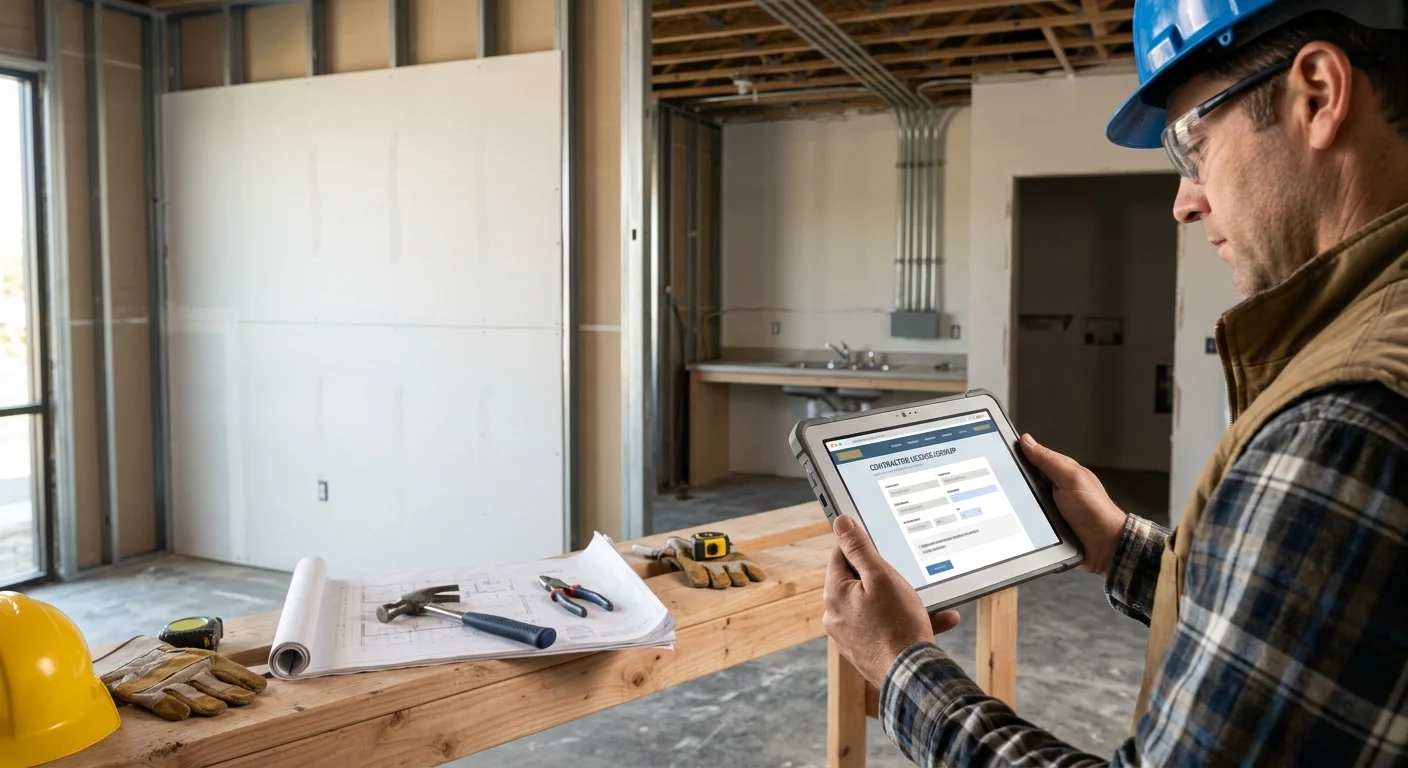
The search for a commercial general contractor San Diego property owners can verify should begin with the state license lookup. Search the contractor’s name or license number on the official CSLB website, then compare that result with the company named on your bid. That simple check can expose confusion before contracts, deposits, demolition, or material orders enter the picture.
Start with the CSLB license lookup for a commercial contractor in San Diego
The official Contractors State License Board website is the starting point for a California license check. Its “Check a License” tool is free. You can search by a contractor’s license number or name.
Don’t rely on a license number printed at the bottom of a proposal. Enter it yourself. A number can be mistyped, copied from an old document, or connected to a different business name than the one presenting the bid.
Use the following process before discussing the finer points of the project:
- Search the exact license number shown on the proposal.
- Search the contractor’s business name separately.
- Read the complete result and any notices displayed with it.
- Compare the displayed information with the proposal and contract.
- Save a copy of the result with your project records.
Search both ways, even when the first result looks right. The number search tests the number you received. The name search helps you spot differences in spelling, business identity, or the company presenting the proposal.
Our published license number is CSLB #1042918. David Sanchez is the licensed California contractor behind The Rock Remodels. A prospective client can enter that number directly instead of relying on our website or sales materials.
A license lookup should happen early, but it isn’t a substitute for reviewing the job. Treat it as the first gate. The project still needs a clear scope, a sensible permit path, and a written agreement that identifies the same business.
What the license record can confirm
The license record gives you an official place to verify the contractor information presented with a bid. Read what CSLB displays, then compare it directly with your documents. Don’t fill gaps with assumptions.
Start with identity. The business name and license number presented during bidding should lead you to a record that makes sense for the contractor you’re considering. If the proposal uses another company name, ask for a plain explanation before signing anything.
Read the rest of the displayed record carefully. If a classification or other detail appears, ask the contractor to explain how it relates to the proposed work. The explanation should fit the actual scope, not a vague promise that everything is covered.
The lookup can’t tell you whether the proposal is complete. It doesn’t define the demolition plan, finish selections, payment structure, permit responsibilities, or handling of changes. Those belong in the project documents.
It also doesn’t replace a direct conversation with the person responsible for construction. Commercial remodeling often crosses several parts of a building. Walls, electrical work, plumbing, accessibility details, finishes, and existing conditions can affect one another. The contractor should explain how those pieces will be coordinated.
That’s why license verification belongs beside a broader hiring review. Our guide to choosing a contractor covers the scope, communication, and written details that deserve attention after the license check.
Treat a mismatch as a reason to stop and clarify. A contractor should be able to explain which business is bidding, which business will contract with you, and which license number applies to the work.
How to match the bid to the licensed business
A clean match means the same contractor identity follows the project from the license search through the written agreement. Branding can be informal. Your paperwork shouldn’t be.
Place the CSLB result beside the proposal. Compare the names and license number character by character. Then look at the later documents, including the contract, written scope, invoices, and payment instructions. Sudden changes deserve an explanation before money or work moves forward.
The scope needs the same attention. A tenant improvement described as “interior remodeling” leaves too much unresolved. The proposal should separate major parts of the job, such as demolition, framing, rough work, finishes, fixtures, permits, and cleanup. It should also identify exclusions.
| Item to compare | What you want to see | Why it matters |
|---|---|---|
| Contractor identity | The bid and license result point to the same business. | You know which company is presenting the work. |
| License number | The number stays consistent across project documents. | A changed or missing number can signal confusion. |
| Work description | The written scope reflects the actual site conversation. | Clear boundaries reduce disputes about included work. |
| Permit responsibility | The documents identify who handles the permit process. | The project team knows who owns each next step. |
| Changes | Added or removed work receives written documentation. | The scope and payment trail stay connected. |
Don’t accept verbal explanations as replacements for missing scope. A friendly walkthrough helps everyone understand the plan, but the written documents need to carry that plan forward.
Commercial work also deserves a contractor who understands how construction affects the occupied property. For a retail space, office, or other tenant improvement, discuss access, deliveries, noise, dust control, shutdowns, and the areas that must remain usable. Those details shape the build even when they don’t appear in a license search.
You can see how we approach that work on our commercial remodeling and tenant improvements page. License verification opens the conversation. A clear scope shows how the contractor plans to manage the job.
What to check before commercial work starts
Commercial work should begin only after the contractor identity, site scope, permit path, and property approvals fit together. A verified license number doesn’t resolve a gap in any of those areas.
Start with the address. Confirm which public agency has authority over the project before plans move ahead. For permit research, bookmark the City of San Diego Development Services site and the County of San Diego Planning and Development Services site. Use the project address to confirm the right path instead of guessing from a San Diego mailing address.
Next, confirm who can authorize changes to the property. A tenant, property manager, and owner may each have different concerns. The construction documents should reflect the approved scope, especially where work touches shared walls, building systems, entrances, or common areas.
Walk the space with the contractor before the scope is finalized. In a Kearny Mesa tenant improvement, for example, an open ceiling can reveal how lighting, ducts, sprinklers, and partitions occupy the same space. The contractor needs to understand those connections before demolition starts.
The preconstruction conversation should address these points in plain language:
- The written scope should identify the rooms and building elements being changed.
- The contractor should explain who coordinates plans, permits, and inspections.
- The team should identify areas that remain occupied during construction.
- Material selections should match the written scope and intended use.
- Any uncertain existing condition should have a process for review and written approval.
- Payment instructions should remain connected to the business named in the agreement.
Permit planning deserves its own review. Our guide to remodel permits in San Diego explains the permit categories that can enter a remodeling project. The exact path depends on the address and proposed work, so confirm it with the responsible permit authority.
Don’t perform structural, gas, electrical panel, or major plumbing work as an informal side task. Those systems can affect the rest of the property. Put them inside the licensed project scope and coordinate them with the full construction plan.
When to call us
Call when your commercial project involves demolition, building systems, structural changes, or several trades working in the same space. We can review the property, discuss the scope, and explain how our commercial remodeling process fits the job. Call us at (760) 605-5002 for a free in-home estimate.