
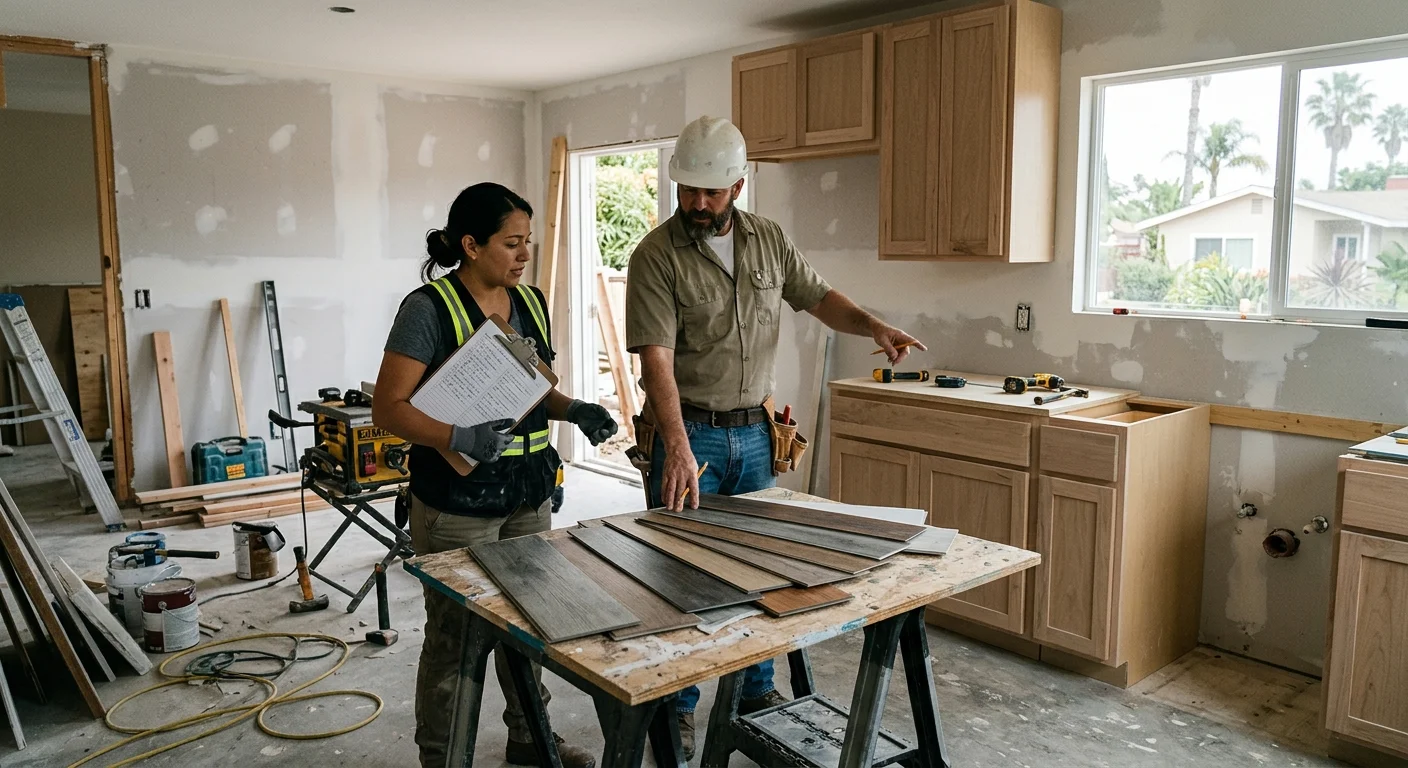
Before a San Diego County rental goes live, fix safety, active damage, and basic function before appearance. A rental property rehab should deliver a dry, usable home with working kitchens, bathrooms, doors, windows, and building systems. Cosmetic upgrades come after those needs have a clear scope.
Rental property rehab starts with safety and function
Start by making the property safe, dry, and fully usable. Fresh paint can wait if a leak is staining drywall, an outlet is damaged, or an exterior door won’t secure properly.
Walk the property as if nobody had explained its history. Turn on fixtures. Open cabinets below sinks. Check walls and ceilings for active moisture. Operate doors, windows, lights, fans, and built-in appliances that will remain. Look behind stored items and around previous patches. A small surface repair can hide a wider problem.
Different San Diego homes reveal different trouble spots. A North Park bungalow may require careful inspection around older wall cavities and previous alterations. A Clairemont rental can have several generations of repairs layered together. A newer Otay Ranch property may show damage from tenant wear instead of repeated remodels. The address changes the investigation, but the priority stays the same.
Use this order when sorting the scope:
- Conditions that could hurt someone or leave the property unsecured belong first.
- Active water entry and plumbing leaks need attention before finishes.
- Electrical, gas, structural, and concealed plumbing concerns need qualified evaluation.
- Kitchens and bathrooms must work as complete rooms.
- Damaged surfaces come before appearance-only replacements.
- Decorative changes belong after the underlying work is settled.
Our guide to signs that it’s time to remodel can help separate isolated wear from problems affecting several rooms. For an investor, that distinction keeps a focused rehab from turning into scattered repair work.
Which repairs protect the rest of the work
Repairs that stop ongoing damage should happen before surface work. Otherwise, new flooring, cabinets, drywall, or paint can become part of the next repair.
Water is the clearest example. A stained ceiling needs more than a coat of primer if moisture is still entering above it. Swollen cabinet panels may point toward a fixture, supply, drain, or countertop problem. Soft flooring near a tub or toilet deserves investigation before anyone installs a new finish over it.
The same logic applies outside. Failed seals, damaged trim, and openings around penetrations can let moisture reach concealed materials. Coastal properties face persistent moisture exposure, while hotter inland conditions can be hard on exterior finishes and sealants. The correct repair starts with the source, not the visible mark.
Sequence matters too. Plumbing and electrical work inside a wall should be resolved before drywall closes it. Wall repairs should finish before final paint. Cabinet layout decisions should happen before countertop measurements and finish plumbing. Flooring transitions need coordination with doors, cabinets, and fixed fixtures.
Use the permit authority tied to the property address when the scope may need review. For addresses within the City of San Diego, start with Development Services. For unincorporated properties, use the County Planning & Development Services website. Other cities in San Diego County have their own departments.
Permit review, inspections, concealed damage, material availability, and owner changes can all affect sequencing. Our home remodel timeline guide explains how those moving parts interact without treating an early target date as a guarantee.
Where kitchens and bathrooms affect the scope
Kitchens and bathrooms shape the rehab because they concentrate plumbing, electrical work, ventilation, storage, and finished surfaces. A room can look dated and still function. Another can look clean while hiding water damage below a sink.
Test the room as a system. In the kitchen, confirm that cabinet doors and drawers operate, counters remain serviceable, the sink area stays dry, and the planned appliances fit the layout. Damaged cabinets may need local repair, selective replacement, or a complete redesign. The right choice depends on condition and how much surrounding work must move.
A kitchen remodeling scope grows quickly when walls, utility locations, cabinet layout, or major finishes change together. Keeping the existing arrangement may reduce disruption, but only when that arrangement works and the concealed conditions support it.
Bathrooms need the same disciplined review. Check the wet areas, vanity, toilet area, ventilation, flooring edges, and wall surfaces. Loose finishes or recurring stains deserve investigation. Replacing visible materials without correcting the source creates rework.
A focused bathroom remodel may preserve sound components while replacing damaged ones. A broader scope may make more sense when several connected surfaces have failed or the room no longer functions properly.
This comparison helps keep appearance from outranking condition:
| Existing condition | Scope priority | Practical response |
|---|---|---|
| Active leak or moisture damage | Essential | Find the source, repair it, and address affected materials. |
| Unsafe or damaged electrical component | Essential | Have the condition evaluated and corrected by a qualified professional. |
| Working but worn cabinet finish | Appearance | Clean, repair, refinish, or replace based on condition. |
| Sound countertop with dated color | Appearance | Keep it unless the larger layout or cabinet scope requires replacement. |
| Loose flooring near a wet area | Investigate first | Check the substrate and moisture source before choosing a finish. |
How durable finish choices reduce rework
Durable finishes should match the property’s wear patterns and cleaning needs. The most decorative option isn’t always the best choice for a rental turnover.
Start with the surfaces that receive regular contact. Flooring meets shoes, furniture, spills, and cleaning equipment. Cabinet finishes face moisture and repeated handling. Wall paint takes scuffs around entries, hallways, switches, and corners. Hardware gets pulled every day.
Consistency helps future repairs. A flooring product that runs through connected spaces avoids awkward transitions. Readily matched paint colors make wall touch-ups easier. Standard cabinet hardware can simplify replacement when one piece becomes damaged. These choices aren’t about making the property plain. They create a finish plan that can be maintained without reopening the entire design.
Material selection must also follow the room. A finish suited to a dry bedroom may not belong beside a tub or sink. Smooth, intricate surfaces may show grime differently than simpler ones. Very delicate finishes can make ordinary cleaning more difficult. Review installation needs, cleaning requirements, moisture exposure, and compatibility with the existing substrate before approving a product.
Avoid choosing finishes in isolation. New flooring changes clearances at doors and transitions. A thicker countertop can affect backsplash details and fixture relationships. New cabinet fronts may conflict with nearby trim or appliance openings. Each selection should be checked against the surrounding work.
For a pre-listing property rehab, aim for a coherent result. Repair what can serve reliably. Replace what’s damaged, incompatible, or likely to force nearby work. That approach keeps the finish package tied to the property’s actual condition.
How to define the bid before work starts
A useful bid defines rooms, materials, exclusions, and decision points in writing. “Update the kitchen” isn’t a scope. It leaves too much room for different assumptions.
Begin with an existing-condition walkthrough. Mark every item as repair, replace, investigate, protect, or remain. Photographs can help identify the exact wall, fixture, cabinet, or flooring area under discussion. If a condition can’t be confirmed until demolition, the bid should identify that uncertainty and explain how additional work will be handled.
Finish selections should be clear enough to price and build. Name the material type, finish, location, and who supplies it. Record which appliances remain. Identify areas receiving paint and areas outside the job. State whether debris handling, surface protection, permit coordination, and final cleaning are included.
Ask for boundaries around connected work. Replacing a vanity may affect plumbing connections, the mirror, wall finish, baseboard, and flooring. Removing kitchen cabinets can expose damaged drywall or unexpected utility work. Those relationships should be discussed before work starts.
An itemized estimate makes competing scopes easier to compare. One rental renovation contractor may include repairs another bidder excluded. A lower total doesn’t explain that difference. The written scope does.
California property owners can check a contractor through the Contractors State License Board. The Rock Remodels is a licensed California contractor, CSLB #1042918. Our realtor and investor rehab service covers focused repairs and broader investment property remodel scopes across San Diego County.
When to call us
Call a licensed contractor when the rehab involves structural changes, concealed damage, electrical concerns, gas work, plumbing changes, or several connected rooms. We can walk the property, separate essential repairs from cosmetic choices, and define a workable scope before listing. Call us at (760) 605-5002 for a free in-home estimate.